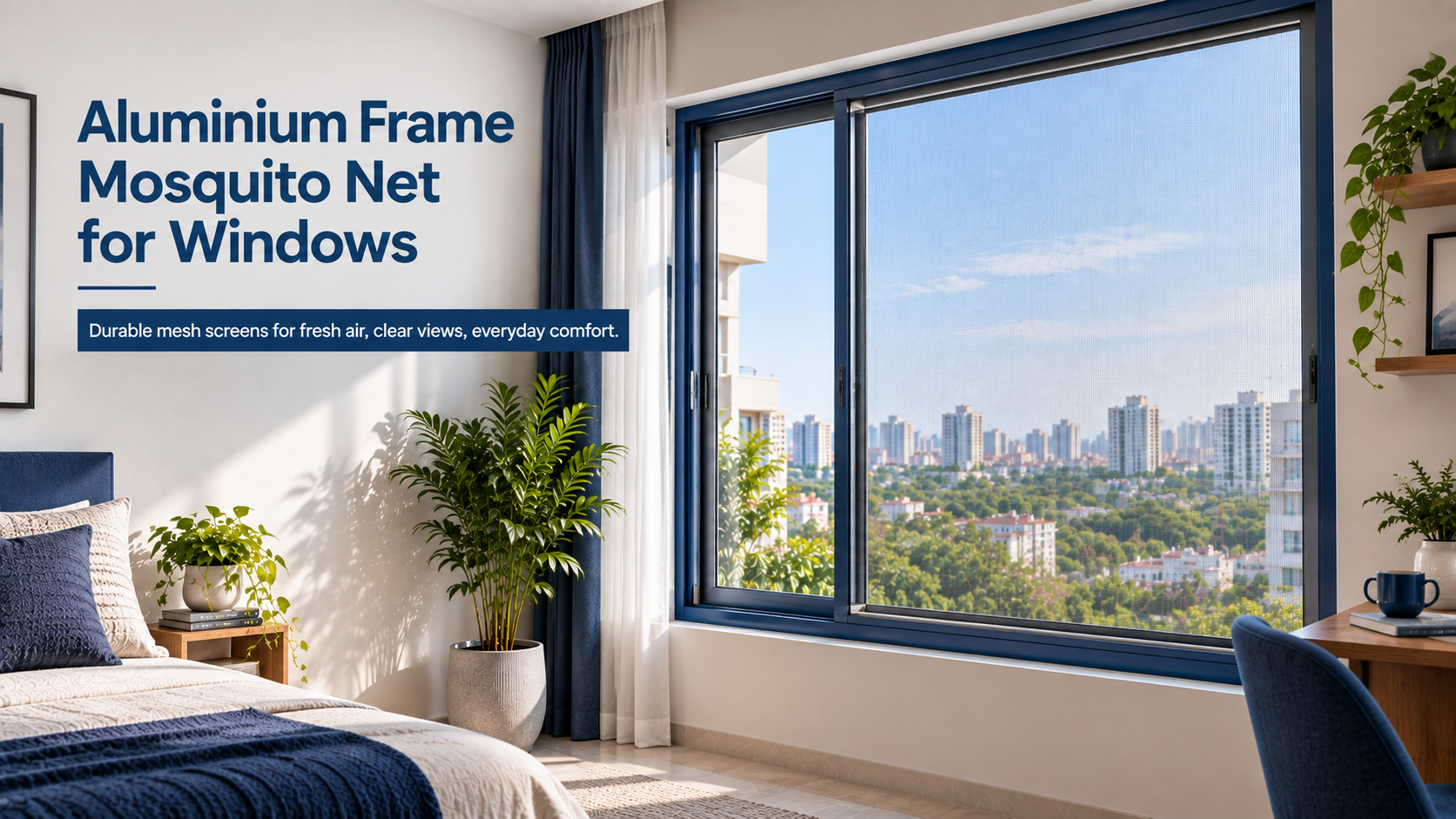
How to Install an Aluminium Frame Mosquito Net for Windows — Step-by-Step
Installing a mosquito screen on a window is one of the practical ways to create a physical barrier against mosquitoes and flying insects while keeping your home ventilated. An aluminium frame mosquito net for windows can be a durable and neat option for suitable residential applications.
But getting a good result is about more than attaching mesh to a frame. Accurate measurements, the correct frame dimensions, proper mesh tension and secure fitting all matter.
In this step-by-step guide, Spensa Screens explains how an aluminium mosquito net can be measured, prepared and installed on a suitable window. We also cover common installation mistakes, maintenance and when professional installation is the better option.
For Hyderabad homeowners, these considerations are especially useful because window sizes and frame configurations can vary significantly between apartments, villas and independent houses.
What Is an Aluminium Frame Mosquito Net?
An aluminium frame mosquito net consists of a mesh screen held within an aluminium frame designed to fit over or within a suitable window opening.
The mesh creates a physical barrier that can help reduce the entry of mosquitoes and other flying insects while allowing airflow through the screened opening.
Aluminium is commonly used for screen frames because it provides a lightweight metal framework suitable for many residential applications.
Spensa Screens offers aluminium mosquito screen solutions for suitable applications.
Why Use an Aluminium Mosquito Screen for Windows?
Windows are an important source of ventilation, but an open window can also provide insects with direct access to indoor spaces.
A properly fitted aluminium mosquito net for windows can allow homeowners to keep suitable windows open while creating a screening barrier.
The World Health Organization (WHO) identifies window and door screens as a household measure that can reduce mosquito contact with people indoors.
The CDC also recommends installing, repairing and using window and door screens as part of mosquito control at home.
Tools and Materials You May Need
Before beginning an installation, make sure you have the appropriate materials and tools for your particular frame system.
- Aluminium screen frame
- Suitable mosquito mesh
- Frame connectors or corners
- Mesh spline or fixing material, where applicable
- Measuring tape
- Marker or pencil
- Appropriate cutting tools
- Rubber spline roller, where applicable
- Screwdriver or drill, depending on the frame system
- Suitable fasteners
- Utility knife for trimming excess mesh
The exact tools vary depending on the screen design and whether the frame is being assembled from individual components or supplied as a finished unit.
Step 1: Identify the Window Type
Before measuring anything, identify the type of window you have.
It could be:
- Sliding window
- Openable window
- UPVC window
- Aluminium window
- Fixed window
- Another custom window configuration
The window type affects how the mosquito screen should be positioned and how it will interact with the existing frame.
A screen designed for one type of opening may not be suitable for another, so check the installation method before ordering materials.
Step 2: Measure the Window Opening
Accurate measurement is one of the most important parts of installing an aluminium frame mosquito net for windows.
Measure the relevant width and height of the installation area. Depending on the design, measurements may need to be taken from the inside of the frame, the opening or another designated installation surface.
Do not assume that a window's advertised dimensions are the exact dimensions required for the screen.
Measure carefully and check the opening at more than one point to identify possible variations.
Spensa Screens also provides a useful guide on how to measure a window mesh frame.
Step 3: Determine the Required Frame Size
Once the opening has been measured, determine the required aluminium frame dimensions according to the selected installation method.
The frame should fit securely without creating unnecessary gaps around the edges.
For custom installations, the required clearance and fixing method should be confirmed before the frame is fabricated.
Step 4: Assemble the Aluminium Frame
If the frame is supplied as separate aluminium profiles, connect the frame sections using the appropriate corner connectors or joining method.
Check that the corners are aligned and that the frame forms a stable rectangle or the required shape.
Measure the assembled frame again before installing the mesh.
A frame that is not square can create problems during mesh fitting and final installation.
Step 5: Position the Mosquito Mesh
Place the mosquito mesh over the assembled frame, leaving sufficient excess material around the edges for fixing and trimming.
The mesh should be positioned evenly so that it can be secured without excessive stretching or unwanted folds.
A clean, evenly positioned mesh is important for achieving a professional-looking result.
Step 6: Secure the Mesh to the Frame
Depending on the frame design, the mesh may be secured using a spline, fixing channel or another suitable mechanism.
Work around the frame gradually rather than securing one side completely before moving to the others.
This helps maintain relatively even tension across the mesh.
Avoid pulling the mesh excessively. Too much tension can distort the mesh or affect the frame shape.
Step 7: Trim the Excess Mesh
After the mesh has been secured around the frame, carefully trim away the excess material.
Use an appropriate sharp cutting tool and take care around the frame edges.
The finished mesh should sit neatly within the frame without loose edges or unnecessary material extending beyond the installation area.
Step 8: Check the Frame and Mesh
Before installing the completed screen, inspect the entire assembly.
Check for:
- Loose mesh
- Visible folds
- Damaged mesh
- Uneven frame corners
- Loose connectors
- Excess material
- Potential gaps around the installation area
If something looks incorrect, it is better to correct it before fixing the screen to the window.
Step 9: Install the Screen on the Window
Position the aluminium screen frame according to the selected installation method.
Depending on the window configuration, the screen may be installed within a frame, against the opening or using suitable clips, brackets or fasteners.
Make sure the screen is securely positioned and does not interfere with the normal operation of the window.
Step 10: Test the Window
Open and close the window several times to make sure the mosquito screen does not interfere with normal operation.
Inspect the edges and corners for visible gaps.
If the screen is removable, check that it can be removed and reinstalled without unnecessary difficulty.
Common Mistakes When Installing Aluminium Mosquito Nets
1. Taking Only One Measurement
Window openings can vary slightly from one point to another. Taking measurements at multiple points can help identify inconsistencies.
2. Ordering the Wrong Frame Size
A frame that is too large may not fit correctly, while a frame that is too small can leave unwanted gaps.
3. Stretching the Mesh Too Much
Excessive tension can distort the mesh and may affect the appearance of the finished screen.
4. Ignoring the Existing Window Frame
The existing frame determines where and how the screen can be installed. Always inspect the available mounting area before finalizing the design.
5. Blocking Window Operation
A screen should not prevent the window from opening, closing or locking correctly.
6. Leaving Gaps Around the Screen
A mosquito screen is intended to cover the opening. Poor fitting or incorrect measurements can create gaps that reduce its effectiveness as a physical insect barrier.
Aluminium Mosquito Net vs Other Mesh Materials
Aluminium is only one possible mesh option. The appropriate material depends on the application, desired characteristics and budget.
| Mesh Type | General Characteristics | Suitable Applications |
|---|---|---|
| Aluminium | Metal mesh option with a lightweight frame | Suitable window and screening applications |
| Fiberglass | Lightweight screening material | Suitable doors and windows |
| SS Mesh | Stainless steel screening option | Applications requiring a metal mesh option |
| Pleated Mesh | Folding/retractable design | Frequently used doors and windows |
Spensa Screens also provides fiberglass mosquito screens and SS mosquito screens for suitable applications.
Should You Install an Aluminium Mosquito Net Yourself?
A simple removable screen may be manageable for someone experienced with basic tools and accurate measurement.
However, custom window screens can involve precise measurements, frame fabrication, mesh fitting and installation around existing window structures.
If you are uncertain about measurements or the correct fixing method, professional installation can be a better option.
This is particularly relevant for multiple windows, unusual openings, UPVC windows, large openings or installations where a clean finished appearance is important.
Professional Mosquito Net Installation in Hyderabad
For homeowners looking for mosquito net installation in Hyderabad, the installation process should begin with understanding the window and measuring the opening correctly.
Different Hyderabad homes can have different window profiles and dimensions, so the same frame configuration may not be appropriate for every property.
Spensa Screens can help homeowners identify suitable screening solutions according to their doors, windows and residential requirements.
Explore the Spensa Screens product range to see available screening solutions.
How to Maintain an Aluminium Frame Mosquito Net
Regular cleaning and inspection can help keep your window screen in good condition.
- Remove dust from the mesh periodically.
- Clean the aluminium frame with an appropriate gentle cleaning method.
- Inspect the mesh for holes or tears.
- Check the frame for damage or loose components.
- Do not force removable screens into position.
- Repair damaged mesh promptly.
The CDC recommends repairing holes in window and door screens because damaged screens can allow mosquitoes to enter.
How Often Should You Replace a Mosquito Screen?
There is no single replacement schedule that applies to every screen.
The useful life of an aluminium window screen depends on factors such as mesh material, exposure, installation quality, handling and maintenance.
Instead of replacing a screen simply because of age, inspect the mesh and frame. If the mesh is damaged or the frame is no longer secure, repair or replacement may be appropriate.
Is an Aluminium Mosquito Screen Worth It?
For suitable window applications, an aluminium mosquito screen can be a practical investment for homeowners who want a durable framed screening solution.
The value depends on the quality of the frame and mesh, the suitability of the design, the installation and how frequently the window is used.
Rather than choosing purely on price, consider the complete installation and whether the screen is appropriate for your particular window.
Final Checklist Before Installing an Aluminium Mosquito Net
- ✔ Identify the window type.
- ✔ Measure the installation opening accurately.
- ✔ Check measurements at multiple points.
- ✔ Confirm the frame dimensions.
- ✔ Select the appropriate mesh.
- ✔ Check available installation space.
- ✔ Make sure the screen will not interfere with window operation.
- ✔ Inspect the completed frame before installation.
- ✔ Check for gaps after installation.
- ✔ Establish a basic cleaning and inspection routine.
Get the Right Aluminium Mosquito Screen for Your Windows
An aluminium frame mosquito net for windows can provide a practical screening solution when the frame, mesh and installation method are correctly matched to the window.
Accurate measurement is one of the most important steps, but the right screen also depends on the window type, available space, mesh material and how frequently the window is used.
If you are looking for aluminium mosquito screens in Hyderabad, Spensa Screens can help you explore suitable options for your home's windows.
Need help choosing the right window screen? Contact Spensa Screens to discuss your requirements.